Countries by Social Support
Complete ranking of 38 countries • Percentage of population aged 15 years or over • Data refreshed May 28, 2026
Leader
Iceland
Field size
38 countries
Lowest rank
South Korea
Ready to play?
Think you can call the next one?
Use this Social Support briefing as a warm-up, then jump into a fast country round.
About Social Support Rankings
Iceland leads all 38 countries in Social Support with a value of 98.08% of adults 15+, while South Korea ranks last at 79.05% of adults 15+. The gap between top and bottom reflects meaningful global variation.
What Social Support Measures
Share of people who say they have someone to count on in times of trouble, from OECD How's Life / Well-Being.
Why This Ranking Matters
Examining Social Support across all countries reveals patterns that might not be obvious at the national level. Regional clusters, outlier nations, and historical trajectories all become clearer when the full global picture is assembled in a single ranking.
Global Range
Values range from 79.05% of adults 15+ (South Korea) to 98.08% of adults 15+ (Iceland) — minimal difference across 38 countries.
Regional Patterns
European countries dominate this ranking, holding 16 of the top 20 positions. This strong regional concentration suggests shared economic, geographic, or policy factors that drive higher values across the continent.
Values are broadly distributed across countries, with the middle 50% ranging from 87.99% of adults 15+ to 92.87% of adults 15+. The overall spread from 79.05% of adults 15+ to 98.08% of adults 15+ reflects significant global variation.
Notable Outliers
The top of the ranking is competitive: Iceland and Finland are separated by only 3%, indicating that the leading positions could shift with updated data.
Continental Leaders
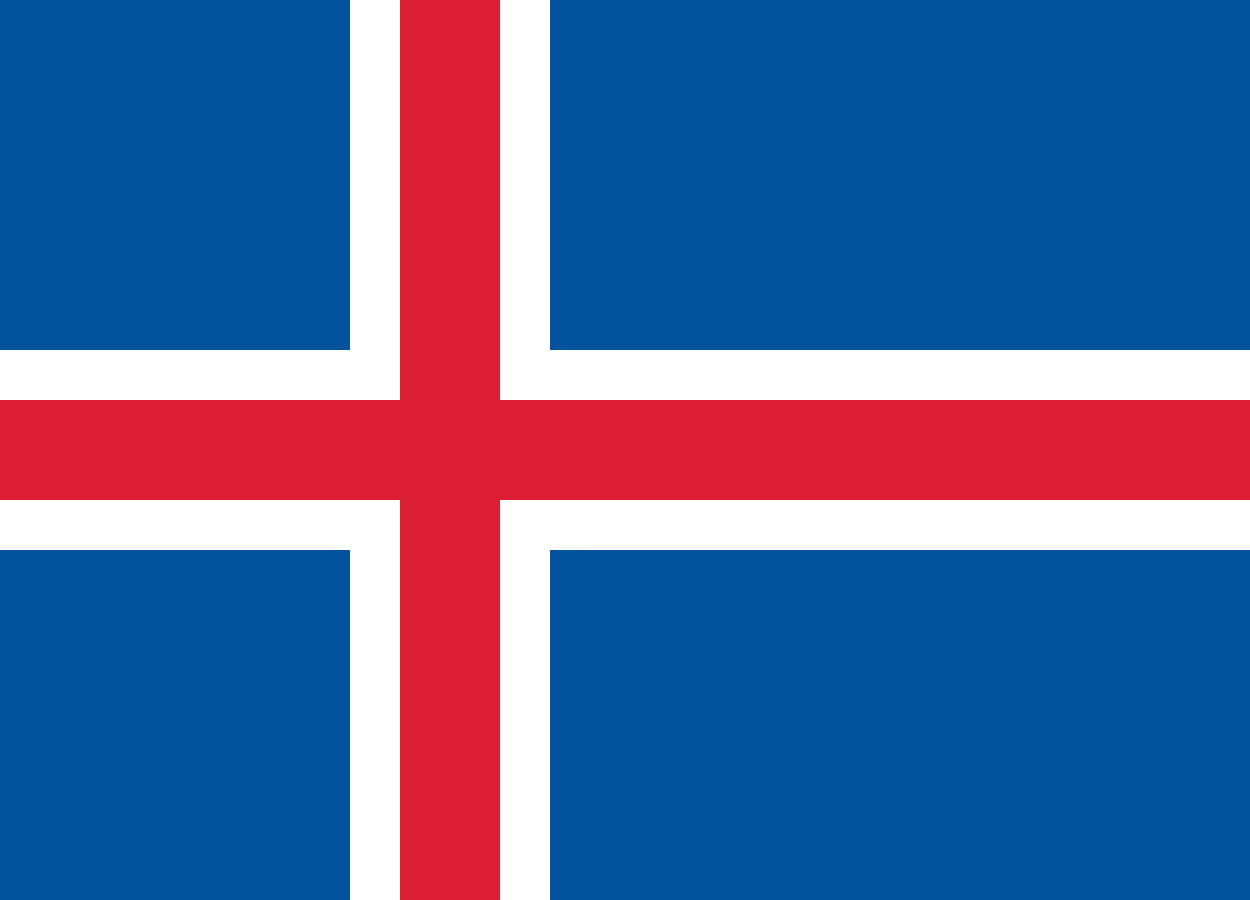
Highest Social Support
The 5 strongest Social Support reads.


Lowest Social Support
The 5 lowest Social Support reads.
Data Note
Rankings are based on the latest available data from OECD How's Life / Well-Being, covering 38 of 249 countries and territories. Countries without data for this metric are excluded from the ranking. All values represent the most recently reported figures.